Legislation and Market Trends for Aftermarket Parts in the Autonomous and ADAS Era
Let’s be honest—the car you drive is changing. Fast. It’s not just about horsepower or sleek design anymore. It’s about a network of sensors, cameras, and software that can see, think, and react. This shift toward autonomous driving and Advanced Driver-Assistance Systems (ADAS) is a seismic one. And it’s sending shockwaves through a massive, established industry: the aftermarket parts world.
For decades, the aftermarket has thrived on freedom—the freedom to choose, to customize, to repair on your own terms. But what happens when a simple fender bender involves recalibrating a radar sensor? When replacing a windshield means ensuring a camera’s view is perfectly aligned? The rules of the game are being rewritten, both by new technology and by the legislation scrambling to keep pace.
The Regulatory Tightrope: Safety vs. “Right to Repair”
Here’s the deal. Lawmakers are walking a tightrope. On one side, there’s the undeniable priority of safety. ADAS features like automatic emergency braking and lane-keeping assist are complex life-saving systems. A poorly calibrated sensor isn’t just a minor flaw; it’s a potential failure point that could have serious consequences.
This concern is driving, pun intended, new legislative scrutiny. We’re seeing discussions around:
- Certification Standards for Technicians: The idea that working on an ADAS-equipped vehicle requires specific, certified training. It’s moving from a mechanical skill to a digital-mechanical hybrid.
- Parts Authentication and Data Sharing: Bills, like the evolving Right to Repair legislation in various states and countries, are pushing for OEMs to share necessary repair data, tools, and software with independent shops. The fight is over access to those proprietary calibration routines and diagnostic codes.
- Liability Redefinition: This is the big, thorny one. If an aftermarket part is installed and an ADAS system fails, who is liable? The part manufacturer? The installer? The vehicle owner? The legal framework here is still foggy, like a camera lens on a cold morning.
Market Trends: Adaptation is the Only Constant
So, how is the market responding? It’s not sitting still. In fact, the trends we’re seeing are a fascinating mix of challenge and opportunity.
The Rise of “Calibration-as-a-Service”
Independent repair shops and even some parts retailers are investing heavily in calibration equipment and training. It’s becoming a core service, not an add-on. You might see a shop’s sign change from “Collision Repair” to “Collision & Calibration Center.” This is a direct market adaptation to the technical demands of ADAS.
Parts Themselves Are Getting Smarter
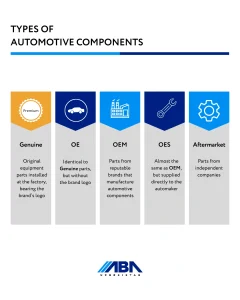
Aftermarket parts manufacturers aren’t just making replica bumpers anymore. They’re engineering ADAS-compatible components. A replacement windshield must have the exact optical clarity and thickness for the camera behind it. A bumper cover needs precise sensor mounting points and use of materials that don’t interfere with radar signals. The part itself is now part of the system.
The Data Gold Rush
This is the undercurrent shaping everything. Vehicles generate terabytes of data on system performance, sensor health, and driving patterns. Whoever controls and interprets this data holds immense power. The aftermarket is pushing for access to ensure competitive repair, while OEMs view it as a proprietary asset. This battle over the vehicle’s digital footprint will define the market’s future structure.
A Practical Look: What Repair Looks Like Today
To make this concrete, let’s walk through a common scenario. Say a car with forward-collision warning gets a minor front-end repair. Here’s the new reality:
| Step | Traditional Repair | ADAS-Era Repair |
| 1. Part Replacement | Install new bumper, grill, maybe headlight. | Install new bumper/grill designed for sensor placement. Ensure no paint or material interferes with radar. |
| 2. Alignment | Check wheel alignment. | Check wheel alignment AND sensor alignment. The radar/camera must be aimed to a fraction of a degree. |
| 3. Calibration | Not applicable. | Critical. Use OEM or third-party scan tools to run calibration software, often requiring specific targets and a leveled bay floor. |
| 4. Verification | Test drive for fit and finish. | Test drive with a diagnostic tool to confirm ADAS systems are active and reporting no faults. |
See the difference? It’s a more complex, more technical, and frankly, more expensive process. That’s the new baseline.
Where Do We Go From Here? A Fragmented Future
Predicting the endpoint is tricky. The market is fragmenting into tiers. You’ll have:
- The OEM-Dependent Tier: Repairs that strictly follow dealer protocols, using only OEM parts, for maximum system assurance (and cost).
- The Certified Independent Tier: Shops with the right tools, training, and potentially, certified aftermarket parts that meet OEM specifications. This is where much of the growth will be.
- The “Gray Market” Risk Tier: Repairs that ignore or bypass calibration, using non-compliant parts. This is the wild west, posing clear safety and liability risks.
Honestly, the relationship between aftermarket companies and OEMs will be… complicated. It’ll be a mix of competition and uneasy collaboration. We might see more licensing agreements, where OEMs certify certain aftermarket parts or tools for a fee. It’s a dance between protecting intellectual property and acknowledging that the independent repair ecosystem is too vast to disappear.
The final thought? The era of the “dumb” car part is over. Every component touched by the sphere of autonomy and ADAS becomes, in a way, intelligent. It carries with it data, calibration requirements, and a weight of responsibility. Legislation will slowly carve out the lanes we must drive in, but market innovation—the relentless human drive to adapt and find a way—will determine the speed. The aftermarket industry isn’t facing obsolescence. It’s facing its most significant transformation yet. The ones who evolve from mechanics to mechatronics, from parts suppliers to systems partners, will be the ones under the hood of the future.
About Author